PUZZLE BREAKS · MINI METRO
A line that reaches every station can become a very slow answer to every journey. Give routes useful jobs and make transfers deliberate.
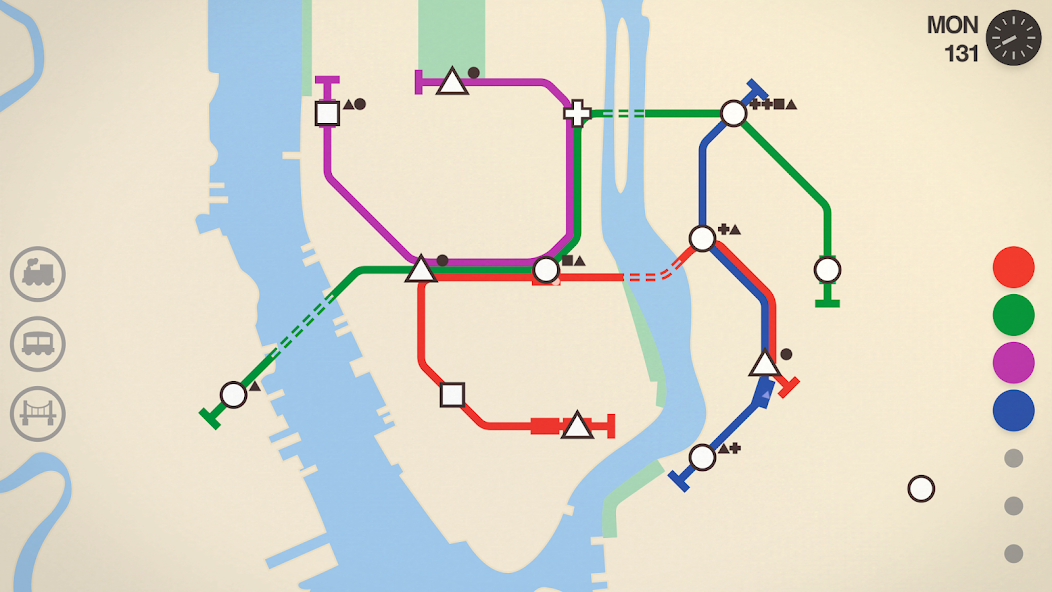
Give the line a purpose
Look at the shapes and geography around a group of stations. A useful line should connect demand with destinations rather than simply gather all nearby stops. Ask which journeys it makes easier and which journeys still require a transfer. This creates a clearer test than judging the line only by how tidy it looks.
Notice the cost of one more stop
Extending an existing line may be the easiest immediate action, but it also changes the distance its trains travel. Repeated extensions can make service feel less frequent at the original stations. Before adding a distant stop, compare the extension with a separate route or a better transfer. The available lines and upgrades constrain the choice, so the practical answer may be a temporary compromise.
Use transfers to solve a journey
A junction is valuable when it connects people to destinations they cannot reach efficiently already. Making every line meet at one station can concentrate too much demand there. Consider whether a second useful connection would distribute journeys more naturally. Evaluate the actual passenger shapes rather than assuming more intersections always mean a stronger network.
Leave the map adaptable
The city keeps growing, and a route that works now may need a different role later. Avoid spending every available connection merely to perfect the current diagram. Watch the oldest sections after expanding into a new area; new demand can reveal weaknesses far from the latest station. A compact network with a clear reason for each transfer is easier to adjust than a sprawling web whose original purpose you have forgotten.