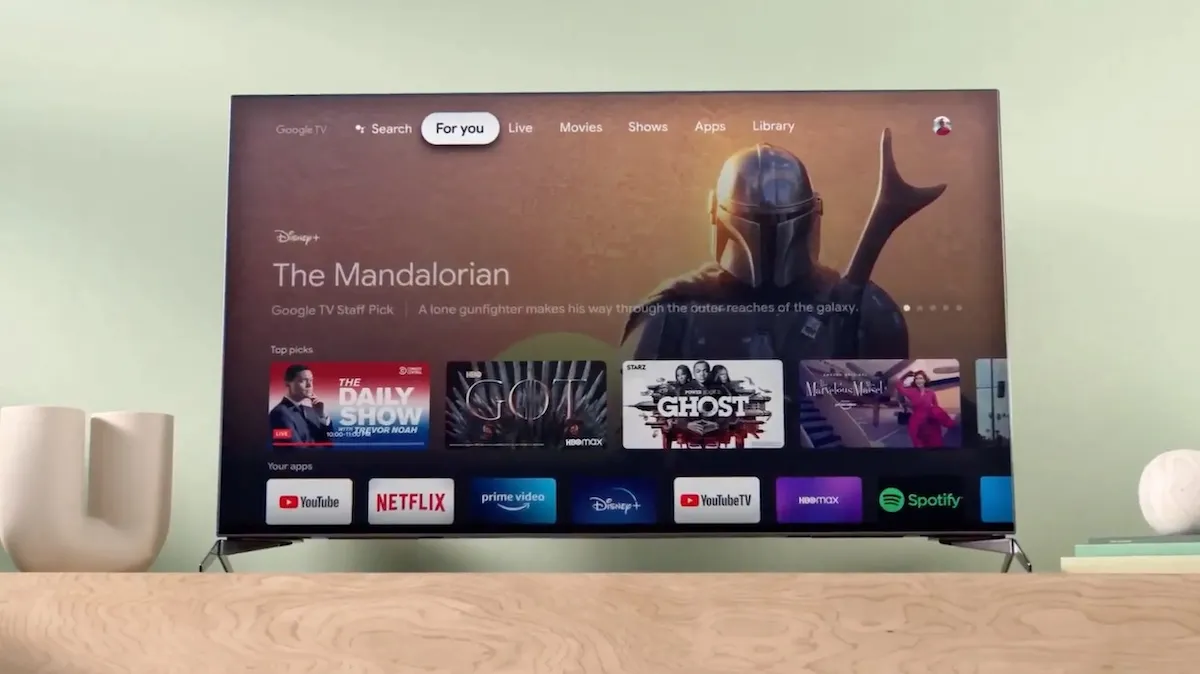
What is a recent application of artificial intelligence? Simplifying smart TVs by stripping away bloated, pre-installed software. Recently, various developers and experts in “optimizing the TV experience” have shared solutions designed to enhance how we use our televisions—removing advertisements, accelerating app launch times, redesigning home screens, and disabling tracking features.
One such solution, dubbed “dumbtv,” describes its mission on its GitHub page: “Your TV should only do what you paid for it to do: run your apps and handle your HDMI inputs—nothing more. The TV itself shouldn’t serve ads, track your viewing habits, or push unwanted updates.”
Another tool, “cleanyourtv,” promises to remove pre-installed software from any Android TV or Google TV device over Wi-Fi, while replacing the default interface with a launcher similar to that of an Apple TV.
While hacking consumer electronics to gain greater system control is nothing new, recent advancements in artificial intelligence have made such practices more accessible to the average person. In the realm of smart TVs, in particular, users are increasingly fed up with being forced to watch advertisements and having their viewing habits monitored by their own devices—a frustration that has fueled the rise of these “hacking” solutions.
Modern smart TVs are equipped with a technology known as Automatic Content Recognition (ACR), which uses screen captures, audio snippets, or other forms of digital fingerprinting to identify exactly what is being displayed on the screen.
If these methods for “dumbing down” smart TVs gain traction among mainstream consumers, they could potentially disrupt the smart TV advertising industry—a sector that profits by selling viewing data to advertisers or leveraging that data to display personalized ads within the TV’s own interface.
As Gathin T., the creator of “cleanyourtv,” explains, the idea to clean up the smart TV interface came to him one afternoon when he grew tired of seeing advertisements on his parents’ television.
“I used Claude Code to clean up the TV interface—removing bloatware and setting up a simple home screen that displayed only the apps they actually use. I shared the project on GitHub and posted ‘before and after’ photos on Twitter; over the next two days, thousands of other people did the same thing to their own TVs—including models from Xiaomi, TCL, Sony, Fire TV, and LG, as well as a couple of projectors.”
This solution does not require obtaining root access to the TV, nor does it prevent users from restoring the device to its factory default state whenever necessary.
Meanwhile, the “dumbtv” solution has undergone end-to-end testing on Fire TV Edition televisions, as well as on Android/Google TV platforms from brands including Sony, TCL, Philips, Hisense, Xiaomi, and Shield. Developer Muzzammil Yasin Sabuwala suggests that to utilize this solution, you should point your preferred AI agent to the “dumbtv” code repository on GitHub.
Sabuwala stated that he developed dumbtv out of frustration with advertisements and the inability to watch exactly what he wanted. He told TechCrunch that his solution utilizes a combination of code from Deepseek V4.1 Flash, Claude Opus 5.5, and Claude Sonnet 5.5. He plans to maintain the project on GitHub and add support for more models over time.
A friendly note: All of these solutions are still under development. Many users are currently testing them across various TV platforms and providing suggestions for updates and fixes.
However, you don’t necessarily need to rely on someone else’s work from GitHub to get the job done.
In a recent viral post on X, Ryan Doyle explained that he simply sent an advertisement from his TV to Claude (an AI assistant), asking, “Can you hack this?” He claims that the AI then guided him through the entire process, enabling him to remove ads and pre-installed software from the TV, speed up a sluggish user interface, and customize the screensaver.
In a follow-up video, Doyle demonstrated just how fast and responsive the interface became after the AI implemented the requested changes.
Inspired by a post about “adding some ‘vibe’ code to a TV,” an X user named Mihir Gupta decided to give it a try himself.
“Spent an afternoon with Claude Code: disabled 25 bloatware apps, replaced the 192 MB stock launcher with an 83 MB custom one, and added a rotating wallpaper,” he wrote.
However, the results of such hacks can be a mixed bag. Some users found that Claude didn’t respond to simple commands like “hack my TV,” requiring more elaborate prompts instead. Others warned that AI agents can make mistakes—potentially disabling essential software packages or causing other malfunctions during the hacking process. Some even reported breaking their Android TVs after using Claude, while others found themselves stuck halfway through the process when attempting to hack a Fire TV.
For those concerned about the total encroachment of artificial intelligence into their television experience, there are already solutions available to customize Android-based smart TVs—such as home screen replacement apps like ATV Launcher, Projectivy Launcher, and FLauncher.