FIND YOUR GAME · MINI METRO
Sometimes you want pressure; sometimes you want room to experiment. Choose a mode around the experience you want instead of treating every session as a score attempt.
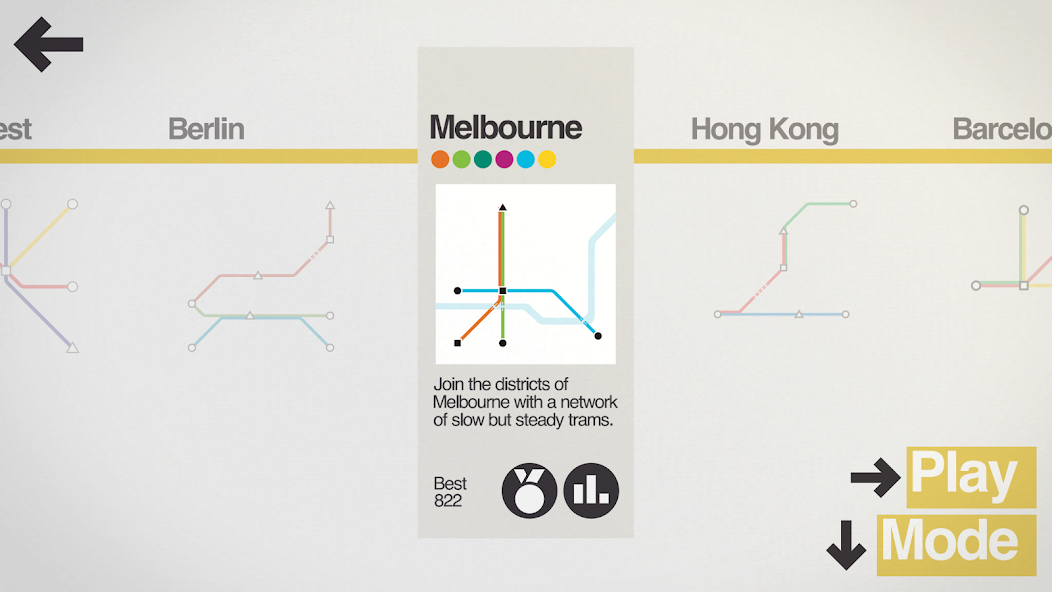
Decide what you are practising
A session aimed at learning transfers needs different expectations from a competitive score run. Before starting, choose a question such as how to connect an awkward station cluster or how to recognise a capacity problem. A narrow question makes experimentation worthwhile even when the resulting city is not your highest-scoring one.
Read the mode description
The developer lists Classic, Endless, Expert and Creative modes. Check the current in-game description for the exact constraints of the mode and platform you are using. Do not assume a route-editing habit from one mode will work unchanged in another. Rules that limit flexibility can change how much spare capacity or planning room you want to preserve.
Use a low-pressure session for comparisons
When a mode gives you room to experiment, compare two ways of serving the same area. Keep the question small: a shorter line versus an extra transfer, for example. Watch where queues form and how trains are used. The point is to see a cause and effect, not to construct an ideal city that never needs adjustment.
End with one idea to carry forward
Write a short reminder about what you learned, such as checking destination shapes before adding capacity. Bring that idea into a later session with more pressure. There is no need to memorise the whole map, because future cities can develop differently. A good practice session leaves you with a clearer way to read the next network and enough energy to enjoy returning to it.